

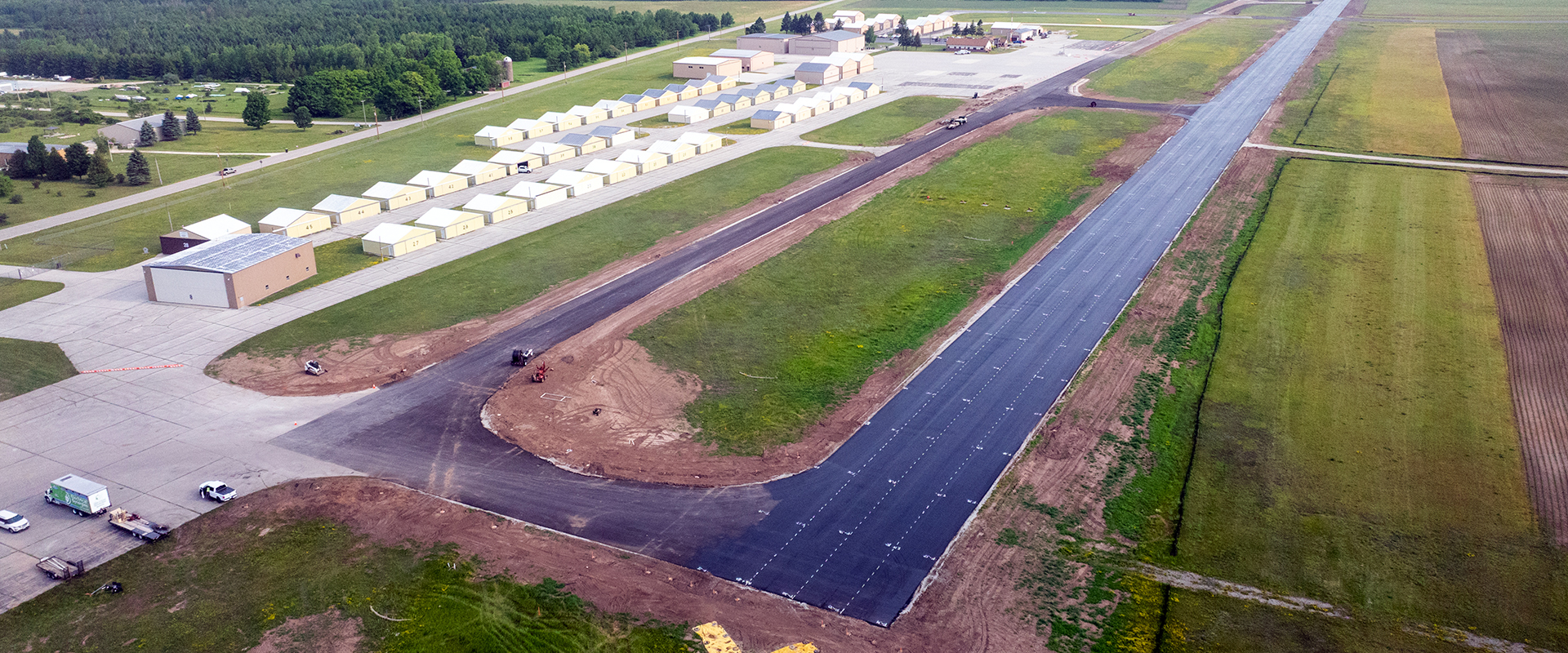
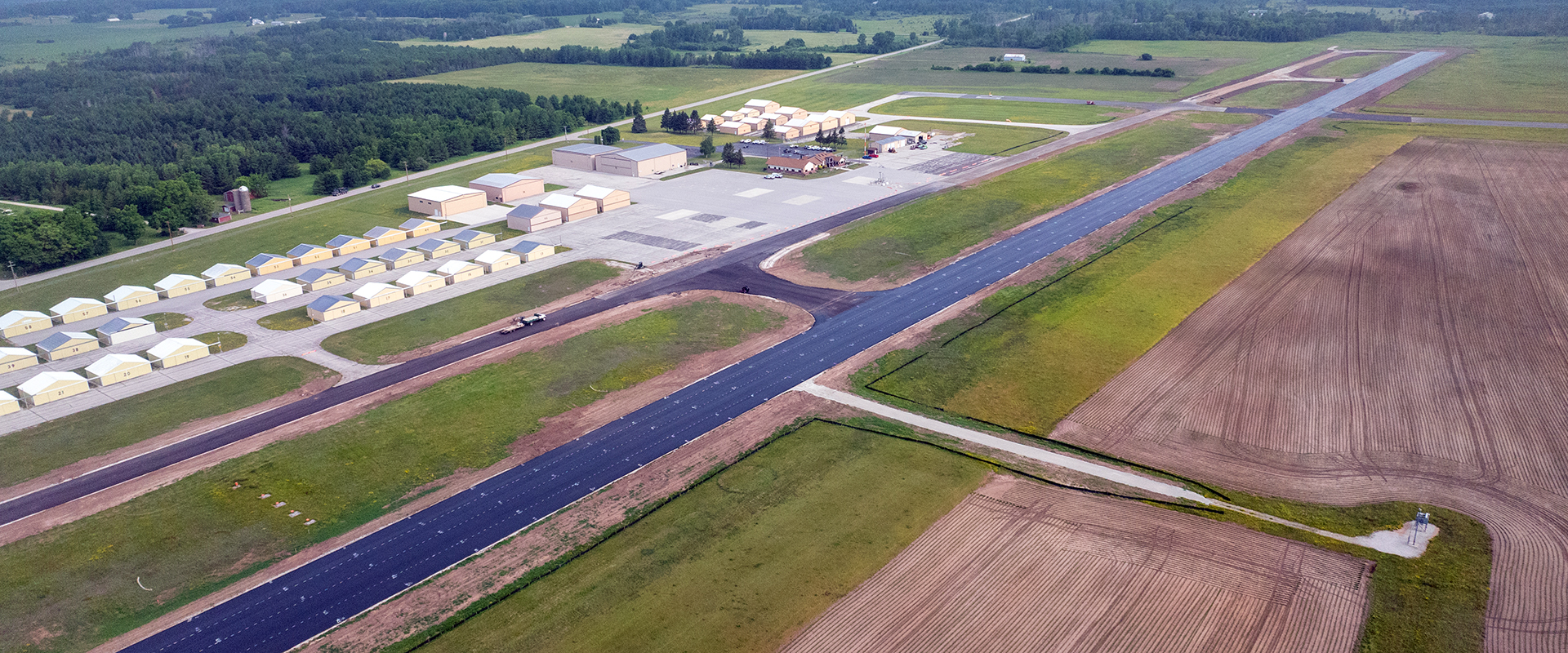
Rehabilitating an active airport takes far more than paving runways. It requires detailed phasing, constant coordination, and the flexibility to adapt when subsurface conditions don’t match expectations.
With just 55 working days allotted for the entire project, every phase has been carefully planned to keep airport operations running while modernizing critical infrastructure.
PROJECT DETAILS
The project includes a comprehensive rehabilitation of the airport’s airfield, including:
- Milled and pulverized taxiways and Runway 2-20 (north/south) while intentionally leaving the Runway 10-28 midfield intersection for a later phase.
- Maintained airport operations throughout construction, allowing continued access to the fuel farm for aircraft.
- Removed existing asphalt, cut to grade, verified 14.6 inches of subbase, and fine-graded surfaces in preparation for paving.
- Removed and replaced culvert crossings.
- Extended the runway safety area by 40 feet at each end.
- Following binder paving, completed a full airport shutdown to mill and pulverize the remaining taxiway and midfield intersection.
- Worked within a strict 15-day closure window, requiring careful planning due to widespread subgrade failures and the anticipated need for embankment stabilization (EBS).
- Complete removal and replacement of the airport’s electrical infrastructure.
- Installed new runway lighting, duct banks, and associated site electrical systems.
Meeting Specifications with Precision
To meet FAA specifications, crews also adopted *echelon paving along the runway centerline, eliminating what would otherwise have been a prohibited centerline longitudinal joint in the surface course. This specialized paving operation helps deliver a smoother, longer-lasting pavement while meeting stringent aviation standards.
Challenges & Solutions
During construction, the team discovered that subgrade conditions did not match the original boring logs. Once the existing pavement was removed and the site evaluated, approximately 75% of the subgrade was found to be unsuitable, requiring significantly more excavation, suitable fill, and aggregate placement than originally anticipated.
To keep the project moving, the team expanded from one planned grading crew to three, bringing in a Northeast Asphalt fine grading crew and an additional grading crew to complete grading and aggregate placement simultaneously. This collaborative approach helped maintain production despite the substantial increase in work.
Value Delivered
Working closely with the owner, the team identified practical solutions that reduced costs while meeting project specifications.
- Utilized onsite borrow material to fill embankment stabilization (EBS) areas rather than importing all P-208 aggregate, reducing material and trucking costs while making efficient use of onsite resources.
- Recommended a targeted subgrade repair for the remaining taxiway by excavating one foot of unsuitable material, installing geogrid and breaker run, then placing P-208 aggregate to grade. This approach is expected to save the client approximately $200K compared to full embankment stabilization.
- Used echelon paving along the runway centerline to eliminate a centerline joint in the surface course, meeting project specifications while delivering a high-quality finished pavement.
